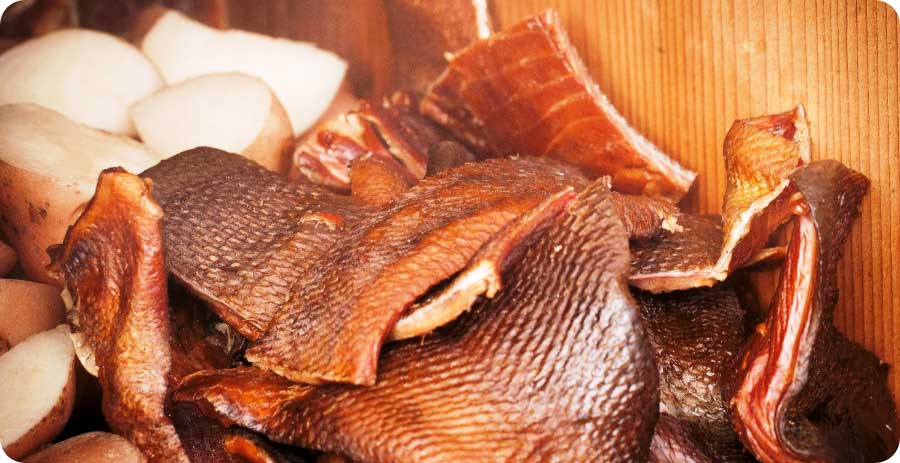
Over thousands of years, Indigenous peoples have developed a wide range of traditional food practices, including:
- Hunting
- Fishing
- Gathering
- Cultivating a vast number of plants and animals in fields, forests, and waterways
The many Indigenous communities within what is now called B.C., including First Nations, Métis chartered communities and Inuit, are unique and diverse, and their food practices are likewise unique and diverse. These food practices continue to support and sustain Indigenous cultures, economies, and ecosystems.
Indigenous foods are grounded in place and reinforce the reciprocal relationships between humans and the natural world. Many Indigenous foods practices foster interconnectedness, such as:
- Harvesting
- Processing
- Preparation
- Sharing of food
When school food programs offer Indigenous foods that are grounded in local cultures, ecosystems, and seasons, they embed Indigenous principles and ancestral teachings into school food environments. This decolonizing approach helps to resist and repair some of the lasting impacts of colonialism, and re-establish and center Indigenous voices, values, teachings, and food systems.
Connecting students to the land where their food comes from and the people that steward this land through storytelling and hands-on, land-based learning activities, can be a powerful act of reconciliation.