“I always tell students to eat their vegetables and fruits first, as these foods are healthy and will make them ready to learn.”
As outlined in the Satter Division of Responsibility in Feeding, the order of eating is a responsibility of the student and builds eating competence. Telling a student how to eat can feel like pressure and can be a deterrent to enjoying their food. Instead, schools can support students in eating vegetables and fruits by offering food literacy opportunities in the classroom or garden, or offering vegetables and fruits choices in school food programs.
Students decide whether to eat, how much to eat, and the order in which they eat.
“The sugary foods sent in my students’ lunches are dysregulating their behaviour! When they don’t eat a healthy lunch, they can’t sit still and learn. What should I do?”
While we know nutritious, balanced meals are supportive for learning, we also recognize that many factors influence the foods a caregiver packs in a child’s lunch. This includes finances, food access, food literacy, culture and more. Decisions about food packed from home are the role of the caregiver (not the school or teacher). In the classroom, teachers can support healthy school food environments by:
- Choosing to offer nutritious foods as part of classroom activities and celebrations, and choosing non-food rewards in the classroom.
- Offering nutritious foods as part of a school meal or snack program.
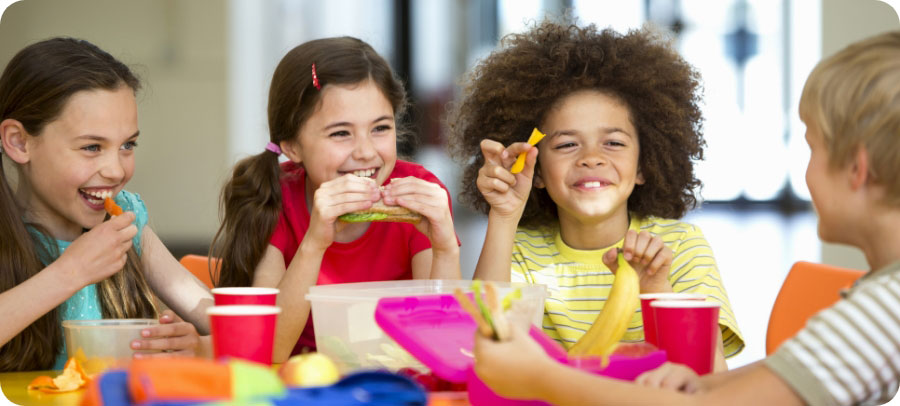
- Ensuring sufficient time for students to sit down and enjoy their lunch or snacks with their friends.
- Talking about food in a neutral manner (i.e., not labelling food as “good”, “bad” or “different”).
- Limiting distractions by creating a calm and respectful eating environment.
- On occasion, eating together with students, taking the time to connect, and role-model enjoyment of eating and social norms (table manners).
- Providing opportunities to taste nutritious foods through food literacy activities in the classroom, including gardening and cooking (see Teach Foods First, or Hands on Food).